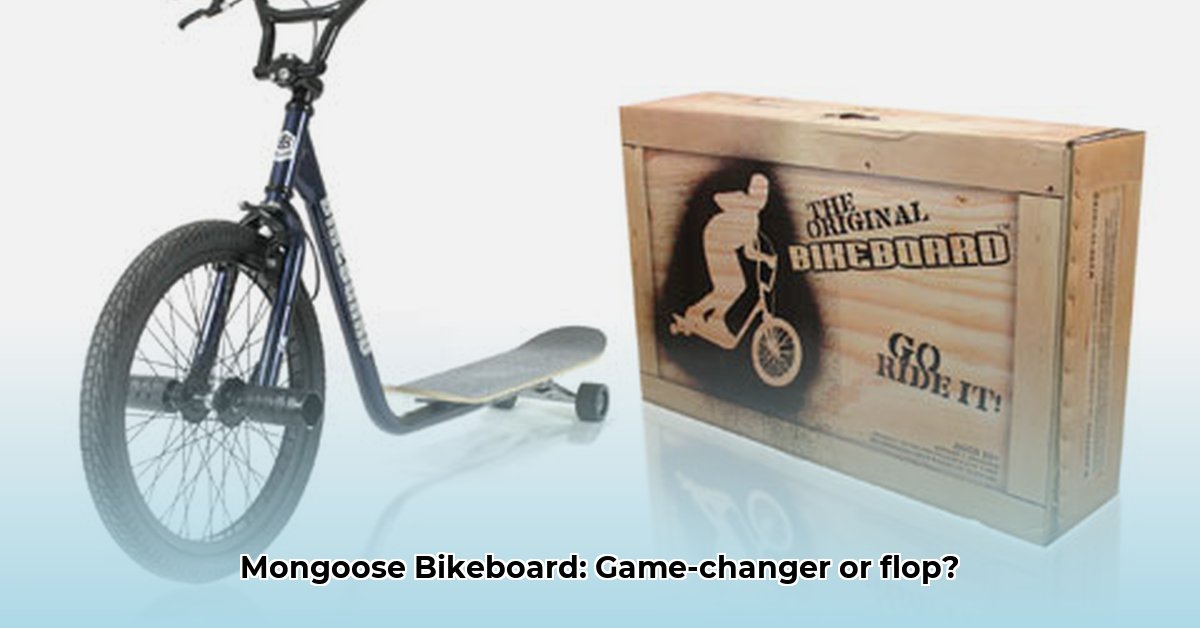
Bikeboard: A Closer Look at Mongoose's Latest Ride
Let's explore the world of bikeboards, starting with Mongoose's newest model. This isn't your grandfather's skateboard; it's a unique blend of bicycle and skateboard, promising an exciting ride. But how does it perform? Let's find out.
The Mongoose BikeBoard: Under the Hood
The Mongoose BikeBoard features a robust steel frame and strong aluminum trucks, providing a surprisingly sturdy feel. Its 20-inch tires (with a 1.95-inch width) ensure a smooth ride, even on slightly uneven terrain. The 70mm polyurethane wheels and ABEC 5 bearings contribute to responsive handling. The handlebars are generously sized for rider comfort. The deck itself appears well-constructed, suggesting durability.
Pros:
- Robust Build Quality: The steel frame and alloy components suggest longevity. It feels built to last.
- Smooth Ride: Larger tires effectively absorb bumps, providing a comfortable experience.
- Responsive Handling: The wheels and bearings combine for agile control.
Cons:
- Limited Performance Data: More real-world user feedback is needed to fully assess performance across varied terrains and riding styles. Independent testing would provide a more comprehensive evaluation.
- Uncertain Target Market: Its design appeals to a wide range of riders, from children learning to balance to adults seeking a novel activity. However, this broad appeal presents a marketing challenge, creating uncertainty about long-term market success. Is it a toy, or a serious piece of sporting equipment?
Beyond the Specs: The Bikeboard's Market Potential
While the Mongoose BikeBoard's technical specifications are clear, its market potential remains less defined. How many people are actually purchasing bikeboards? Is this a fleeting trend, or something with lasting appeal? The lack of readily available market data presents a significant hurdle.
Events like the Santa Vall Gravel Race hint at a potential niche for off-road bikeboarding. However, more research is needed to determine if this represents a larger trend or an isolated instance. This lack of data necessitates a cautious approach. Could bikeboarding become the next big thing in action sports? The question is still unanswered.
Bikeboards could attract a diverse audience. Children might find them easier to learn on than traditional bicycles or skateboards. Adults might see them as a fun and novel way to exercise. This dual appeal is attractive, but it also presents a marketing challenge. Mongoose needs a clear target audience: children? Experienced riders? A precisely defined marketing strategy is paramount.
Charting the Course: A Market Outlook and Risk Assessment
The bikeboard market presents both significant opportunity and considerable risk. Success hinges on a well-defined strategy, encompassing thorough market research, targeted marketing, and adaptability to market feedback.
Market Outlook (Simplified):
- Short-Term: Focused market research is crucial. Targeted marketing campaigns and product refinement based on early user feedback will be essential.
- Long-Term: Product line expansion is likely. A comprehensive marketing strategy addressing multiple demographics will be vital. Strategic sponsorships could greatly expand market reach.
Risk Assessment (Simplified):
| Risk Category | Likelihood | Impact | Mitigation Strategy |
|---|---|---|---|
| Low Market Demand | Moderately Likely | High | Extensive market research; focus on specific niche markets; targeted marketing. |
| Intense Competition | Highly Likely | Moderate | Strong branding; development of unique product features; clear brand positioning. |
| Production Issues | Unlikely | Moderate | Secure reliable suppliers; implement efficient manufacturing processes. |
| Safety Concerns | Unlikely | High | Stringent quality control; clear safety guidelines for users. |
The bikeboard market offers enticing potential, but careful planning and adaptation are essential to overcome potential difficulties and capitalize on emerging opportunities. The future of bikeboarding is uncertain, but with the right strategy, it could be exceptionally exciting.
How to Choose the Best Bikeboard for Gravel Racing
Key Takeaways:
- Gravel racing requires durable, versatile equipment. Tire selection is critical.
- Bikeboard suitability depends heavily on rider skill and race specifics.
- Limited market data demands a cautious assessment of bikeboard viability in gravel racing.
- Further research is vital to assess the long-term potential of bikeboards in this arena.
Mongoose BikeBoard: A Gravel Racing Assessment
The Mongoose BikeBoard presents an interesting option for gravel events. However, its suitability depends on several factors.
Technical Specifications and Performance (Placeholders for Actual Specifications)
| Feature | Specification | Pros | Cons |
|---|---|---|---|
| Frame Material | Aluminum alloy | Lightweight, relatively durable | Susceptible to damage on rough terrain |
| Wheel Size | 20" | Maneuverability, good on paved sections | Less stability/traction on gravel compared to larger wheels |
| Tire Type | All-terrain, puncture resistant | Decent grip on varied surfaces; enhanced puncture resistance. | May not be ideal for extremely muddy or loose gravel. |
| Weight | 15 lbs | Relatively portable. | Can become cumbersome during longer races. |
| Braking System | Disc brakes | Reliable stopping power, even in wet conditions. | Maintenance is necessary. |
| Bearing Type | Sealed bearings | Smooth rolling; low maintenance. | Can eventually wear out over time. |
Note: Replace bracketed placeholders above with actual Mongoose BikeBoard specifications. User reviews would greatly enhance this analysis.
Pros and Cons Summary
The Mongoose BikeBoard offers a lightweight and portable design. Its disc brakes provide reliable stopping power. However, its suitability for gravel racing is debatable due to its smaller wheels and potential frame limitations on uneven terrain. It might be suitable for shorter, less technical races but less so for longer, more challenging events.
The Bikeboard's Place in Gravel Racing: A Market Perspective
The bikeboard market remains largely undeveloped within gravel racing. Comprehensive data on bikeboard usage in gravel events is rare. This absence of data necessitates further research to determine their long-term viability and target demographic. Will they become a mainstream option or remain a niche offering?
Navigating the Uncertainty: Actionable Insights
The lack of reliable market data presents both a challenge and an opportunity. Further research – analyzing race results, gathering rider feedback, and exploring specialized gravel bikeboards – is crucial. Manufacturers can differentiate their products by focusing on features essential for gravel racing, such as enhanced durability and tire options. The development of a gravel-specific bikeboard could open a significant niche market.